
How to Choose a Doctor

For most of my career, I was in a small private practice.  Our staff were like family.  We prided ourselves on providing highly personalized attention to our patients which started at the moment that the patient was greeted by our receptionist.  For a patient to enjoy an optimal medical experience, every member of the team needs to perform at a high level.  The doctor is but one member of a larger team.  Indeed, I have heard personally of patients who have left medical practices who liked the doctors but not the staffs.  Everyone counts.

We saw patients who were self-referred or sent to us by referring doctors or by family members. I have always asked every new patient how they came to see me personally, and I still do.  It is always gratifying when a patient is recommended to us by a medical professional or a family member. You took care of my grandmother and she raves about you!  This not only feels good to the doctor, but the patient arrives already having confidence about the upcoming medical experience. This is a great way for the doctor-patient relationship to commence.

Now that I am employed by a huge medical organization with thousands of physicians, the referral system is quite different.  While I still see some patients who have been sent to me specifically, most of the new patients appear on my schedule by chance. Often, the patients themselves do not even know how they ended up on my schedule.  I had an open appointment slot and a staff member  or a scheduler on the phone filled it.  Having to accommodate tens of thousands of patients requires an impersonal efficiency to keep the trains running.  I understand this, but it doesn’t feel the same to me as you took care of my mom and my sister.  I imagine this feels different for patients also particularly if they enjoyed personalized medical care in the past.  One of the costs of efficiency is intimacy.
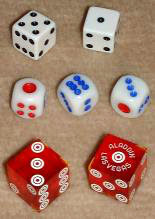

Making appointments is like rolling the dice.

There are many benefits and advantages to being an employed physician, particularly at this stage in my career.  But, of course, there are drawbacks.  Luckily for me, many of my patients have followed me from my prior private practice allowing us to perpetuate the warm relationships that we forged years ago.  I’m not saying that relationships like this can’t develop now.  But it takes more work to do this within a system that is designed to promote productivity and efficiency.  As the employment physician model has become dominant, this is a new reality that patients and medical professional need to accept.  And if the current 'roll the dice' system is all you know, then you won't know what you are missing.  


Comments

Post a Comment

Popular posts from this blog

Stop Medical Malpractice: The White Coat Wall of Silence

Photo Credit Leisure Guy, one of my most faithful commenters, opines that I am omitting an important aspect of the tort reform argument. He has implored me repeatedly to read a particular book that I suspect buttresses his views, but this worthy pursuit is simply not near the top of my priority pyramid. Since he’s retired, he enjoys the luxury of burrowing deeply into the base of his priority pyramid. With 4 tuitions to go, retirement is a distant mirage for me. I’m can be a ‘leisure guy’, but only in my dreams. I have written throughout this blog and elsewhere that there are too many frivolous lawsuits against physicians. I have admitted that caps on non-economic damages are not ideal, because they deny some worthy plaintiffs of complete compensation, but I support them because I believe they serve the greater good. I have ranted that there is no effective filter to screen out physicians who should never be invited to the litigation party in the first place. I believe that the...

When Should Doctors Retire?

I am asked with some regularity whether I am aiming to retire in the near term.  Years ago, I never received such inquiries.  Why now?   Might it be because my coiffure and goatee – although finely-manicured – has long entered the gray area?  Could it be because many other even younger physicians have given up their stethoscopes for lives of leisure? (Hopefully, my inquiring patients are not suspecting me of professional performance lapses!) Interestingly, a nurse in my office recently approached me and asked me sotto voce that she heard I was retiring.    “Interesting,” I remarked.   Since I was unaware of this retirement news, I asked her when would be my last day at work.   I have no idea where this erroneous rumor originated from.   I requested that my nurse-friend contact her flawed intel source and set him or her straight.   Retirement might seem tempting to me as I have so many other interests.   Indeed, reading and ...

Will Smarter Lawyers End Frivolous Lawsuits?

How do you know if a lawyer is any good?  Of course, they've all passed the bar, but now their profession is lowering it.  While most of us strive for excellence, and raise our children to value this virtue, prominent legal educators are establishing a new quality intitiative for their profession.  Who says that lawyers can't reform themselves?  Perhaps, we physicians can follow their bold example and raise the credentials of our pre-medical students.  I’ll present the facts. You be the judge. I have written a dozen posts on tort reform on this blog, which always generate spirited and adversarial retorts from attorneys and their supporters. They accuse me and other tort reform advocates of carrying water for insurance companies. They repeatedly point out that I know nothing about the legal system and are unqualified to opine on its flaws. They deride me when I argue that effective tort reform would reduce the practice of defensive medicine, despite the re...